English Follows Afrikaans
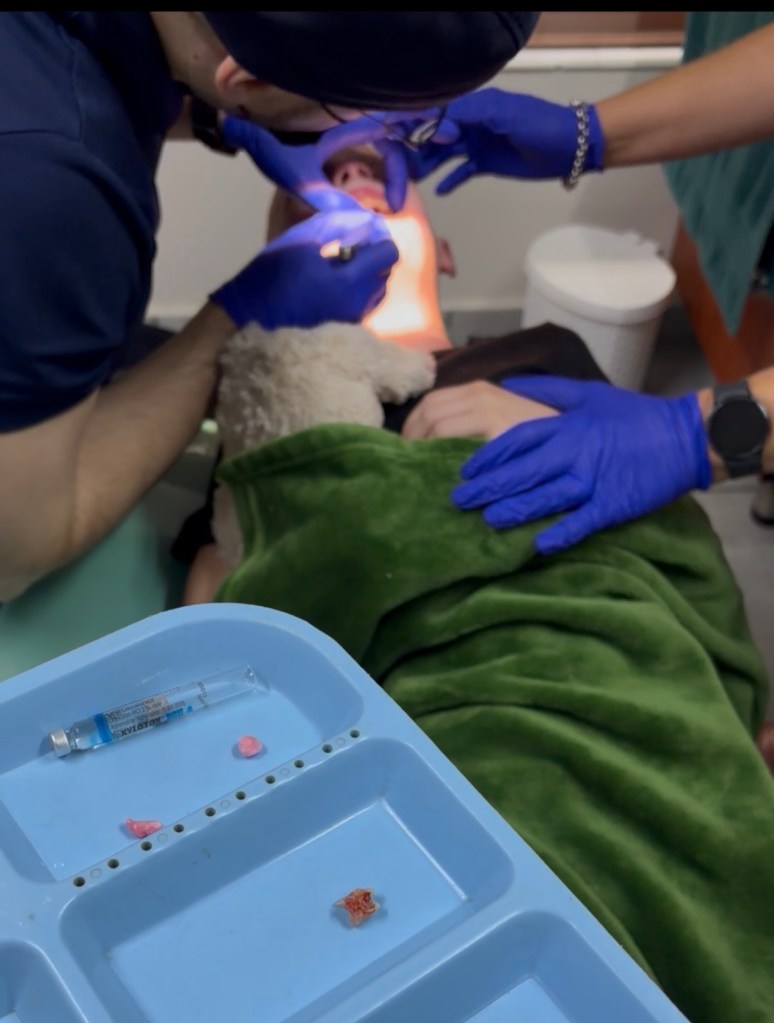
Daar is dinge wat mense sien… en dan is daar dinge wat niemand regtig verstaan totdat hulle saam met jou in die tandartsstoel sit nie. 🦷💛
Een van daardie dinge in Kqiara se pad was haar tande.
Van buite af bring ernstige tandbederf dikwels vinnige aannames — te veel suiker, swak borsel, nalatigheid, nie genoeg sorg nie. Maar wanneer jy binne-in ’n kind se mediese storie leef, besef jy gou dat tande soms ’n baie dieper storie vertel as wat mense dink.
Kqiara het gereelde tandartsbesoeke gehad, goeie mondhigiëne, roetines en al die dinge wat mens veronderstel is om te doen om tande te beskerm. Tog het ons onsself steeds bevind by moeilike behandelings, nuwe planne en die emosionele gewig daarvan om te sien hoe tandbederf vorder op maniere wat nie altyd sin maak met die moeite wat daaragter lê nie.
Wat baie mense nie altyd besef nie, is dat tande by medies komplekse kinders deel kan wees van ’n veel groter prentjie.
In Kqiara se geval laat chroniese inflammasie, herhalende infeksies, immuunstelsel-onbalans en die breër invloed van haar gesondheidspad vrae ontstaan wat veel verder gaan as net borsel alleen. Chroniese strep, PANDAS/PANS-inflammasie, moontlike veranderinge in speeksel, mineraalabsorpsie, mondasemhaling tydens slaap, medikasiegeskiedenis en immuunstres kan alles ’n rol speel in wat binne die mond gebeur.
Speeksel beskerm tande meer as wat meeste mense besef. Dit neutraliseer sure, help om emalje te herstel en beheer skadelike bakterieë. Wanneer daardie balans verander, kan tande vinnig verswak — selfs wanneer mondhigiëne ernstig opgeneem word.
En dan is daar die emosionele deel waaroor min gepraat word.
Om langs jou kind te sit terwyl sy die tandarts vertrou om deur pyn te werk.
Om dapperheid te sien in ’n stoel waarvoor baie grootmense bang sou wees.
Om vrae te probeer antwoord waarop jy self nog antwoorde soek.
Om skuld te dra wat nie altyd joune is nie.
Elke tandartsbesoek word meer as net ’n afspraak. Dit word nog ’n hoofstuk in die verstaan van hoe fyn alles in die liggaam met mekaar verbind is.
Vir ons het hierdie pad geduld geleer, om vrae te vra, vir antwoorde te bly soek en nie altyd net oppervlakkige verklarings te aanvaar nie.
Want soms gaan tandbederf nie net oor tande nie. Soms is dit nog ’n simptoom wat iets dieper probeer sê.
En as daar een ding is wat Kqiara my aanhou leer, is dit dat ware krag dikwels stil opdaag — onder helder tandartsligte, met klein handjies wat styf vasklou, en moed wat baie groter is as haar jare. ✨
Mediese vrywaring:
Hierdie blog deel ons persoonlike ervaring en reis, en is nie bedoel as mediese advies of diagnose nie. Elke kind en elke mediese geval is uniek. Raadpleeg altyd ’n gekwalifiseerde mediese of tandheelkundige praktisyn vir professionele advies, evaluasie en behandeling.
More than Teeth
There are things people see… and then there are things people never fully understand until they sit in the chair with you. 🦷💛
One of those things in Kqiara’s journey has been her teeth.
From the outside, severe tooth decay often immediately brings assumptions — too much sugar, poor brushing, neglect, not enough care. But when you are living inside a child’s medical story, you quickly learn that sometimes teeth tell a much deeper story than what people expect.
Kqiara has had regular dental care, attention to hygiene, routines, and all the things a parent is told should protect a child’s mouth. Yet despite doing what we could, we still found ourselves facing repeated dentist visits, difficult conversations, treatment plans, and the emotional weight of seeing decay progress in ways that never seemed to fully match the effort behind prevention.
What many do not always realise is that in medically complex children, teeth can become part of a much bigger picture.
In Kqiara’s case, chronic inflammation, recurrent infections, immune dysregulation, and the wider effects linked to her health journey raise questions that go far beyond brushing alone. Chronic strep exposure, PANDAS/PANS-related inflammation, possible changes in saliva, mineral absorption, mouth breathing during sleep, medication history, and immune stress can all influence the environment inside a child’s mouth.
Saliva protects teeth far more than most people realise. It neutralises acids, repairs enamel, and helps control harmful bacteria. When that balance changes, teeth can deteriorate quickly — even when hygiene is taken seriously.
And then there is the emotional side no one talks about enough.
Sitting beside your child while they trust a dentist to work through pain.
Watching bravery in a chair that would make many adults anxious.
Trying to answer questions you also wish you understood fully yourself.
Carrying guilt that does not always belong to you.
Every dental visit becomes more than just a check-up. It becomes another chapter in understanding how interconnected the body really is.
For us, these visits have taught patience, advocacy, second opinions, and the importance of asking deeper questions instead of accepting surface answers.
Because sometimes decay is not simply about teeth. Sometimes it is another symptom asking to be heard.
And if there is one thing Kqiara keeps teaching us, it is that strength often shows up quietly — even under bright dental lights, with tiny hands gripping tightly, and courage far bigger than her years. ✨
Medical disclaimer:
This blog shares our personal experience and journey and is not intended as medical advice or diagnosis. Every child and every medical case is unique. Always consult a qualified medical or dental professional for professional advice, assessment, and treatment.

